AI no longer just reads text - it sees images, hears audio, watches video and controls robots. How multimodal perception combined with physical actuation is closing the loop from digital understanding to real-world action.
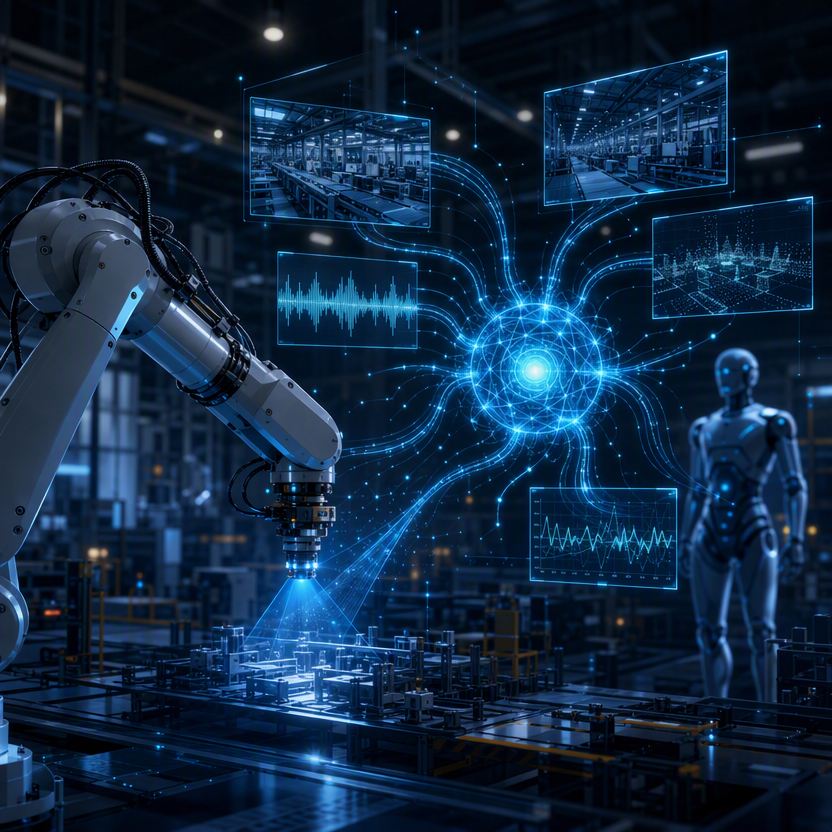
The biggest shift in AI during 2026 is not that models got bigger - it is that they got senses. Multimodal AI now sees, hears and watches alongside reading. Physical AI takes it further: acting on the physical world through robotic bodies. Together they close the loop from perception to action.
1. Vision: AI that truly sees
Modern vision models understand context, not just objects. They can read charts and diagrams, describe medical scans with clinical precision, identify defects on production lines and understand spatial relationships in 3D scenes from 2D images.
- Document intelligence - parsing complex tables, forms and mixed text-image layouts that traditional OCR could never handle
- Medical imaging - detecting anomalies in X-rays, CT scans and pathology slides at specialist-level accuracy
- Industrial inspection - spotting micro-defects on circuit boards or welds at production-line speed
2. Audio: AI that hears nuance
Speech-to-text is now commodity technology. The frontier has moved to understanding tone, emotion, multiple simultaneous speakers and audio context - enabling real-time meeting transcription, call-center sentiment analysis and voice interfaces that understand frustration versus curiosity.
3. Video: AI that understands motion
Video understanding models track objects over time, recognize activities and predict intent from movement patterns. Applications range from security surveillance that understands "someone fell down" versus "someone sat down", to sports analysis and autonomous driving.
4. Physical actuation: AI with a body
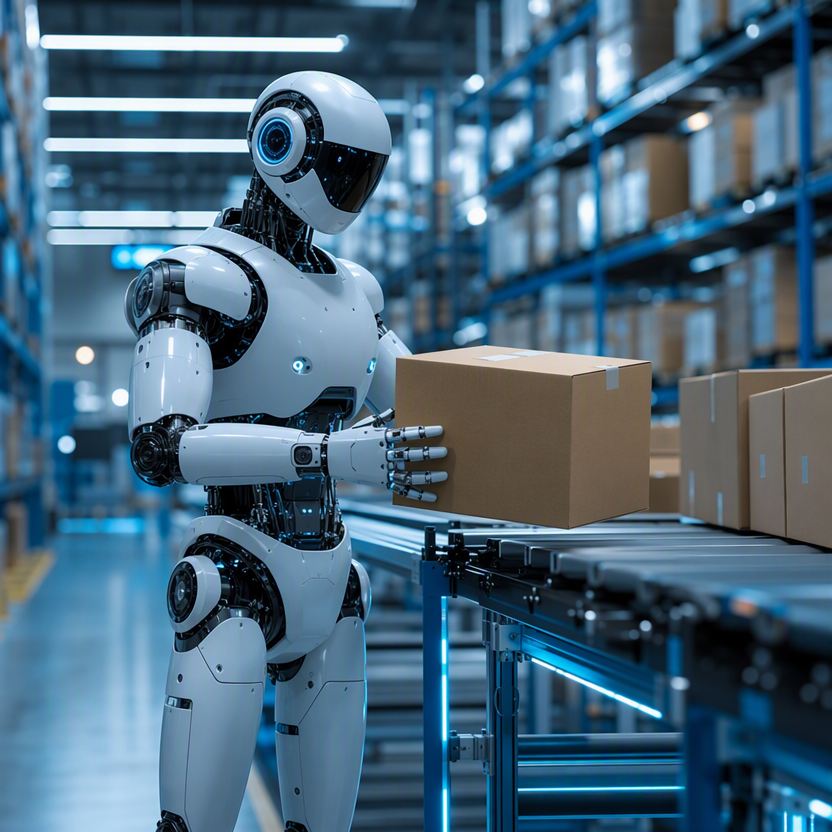
The combination of multimodal perception with robotic control enables machines that see an object, understand what it is, decide how to grasp it and execute the motion - all in real time. This is the foundation of humanoid robots entering warehouses and factories.
What this enables for Thai businesses
- Quality control - visual inspection systems that understand context, not just pixel-matching
- Safety monitoring - video AI that detects unsafe behavior in real time without sending footage to the cloud
- Accessibility - real-time sign-language interpretation and audio description for visually impaired users
- Document automation - processing invoices, contracts and forms with mixed text, tables and stamps
The infrastructure implication
Multimodal AI demands significantly more compute than text-only workloads. Processing video streams at the edge requires GPU acceleration on-site, not just cloud APIs. Devsign designs AI infrastructure for multimodal workloads, from edge devices to data-center GPU clusters.