Deloitte Thailand survey shows Thai organizations benefiting from digital, but most remain at the efficiency level - an analysis of hidden costs, a three-dimensional ROI framework, and a readiness-based roadmap.
For years, digital transformation was equated with moving systems to the cloud, installing an ERP or buying new software. Entering 2026, the executive question is no longer "what technology do we have" but "is the money we invested producing real business outcomes?"
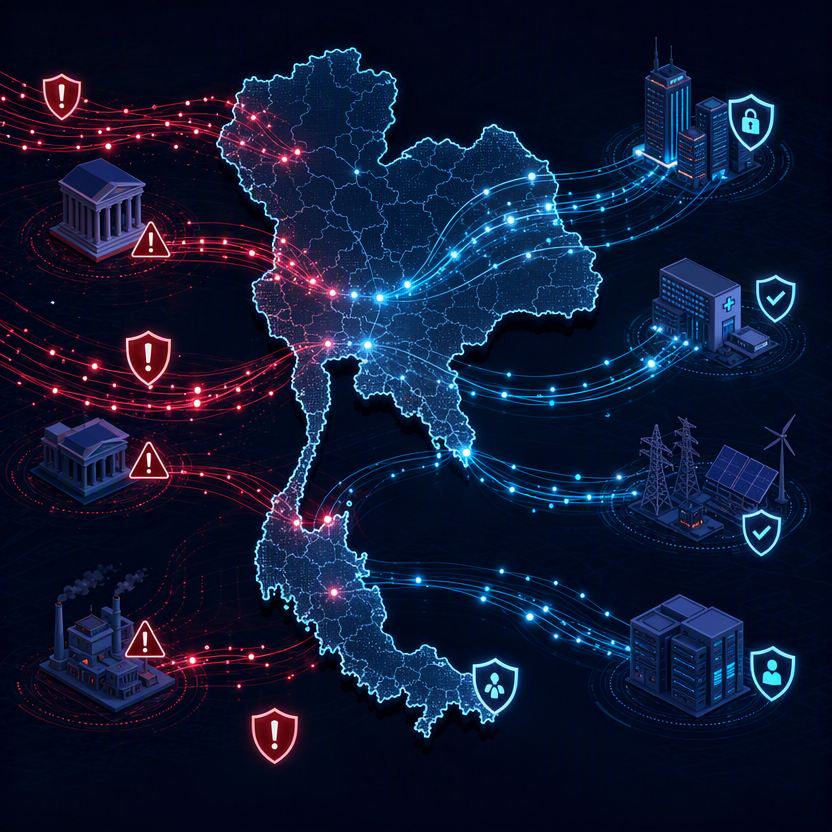
Deloitte Thailand’s Digital Transformation Survey 2025 reflects Thai organizations embedding digital deeper into core operations. The most common outcomes: employee productivity up 67%, customer experience improved 61%, and costs reduced 58% (Deloitte).
These numbers show Thai organizations are already benefiting - but most sit at the "efficiency" level rather than creating new business models or revenue streams, the level that builds durable long-term advantage.
Reality check: having cloud and ERP does not mean you transformed
The main failure point is not the technology itself but the gap between technology and the actual work processes.
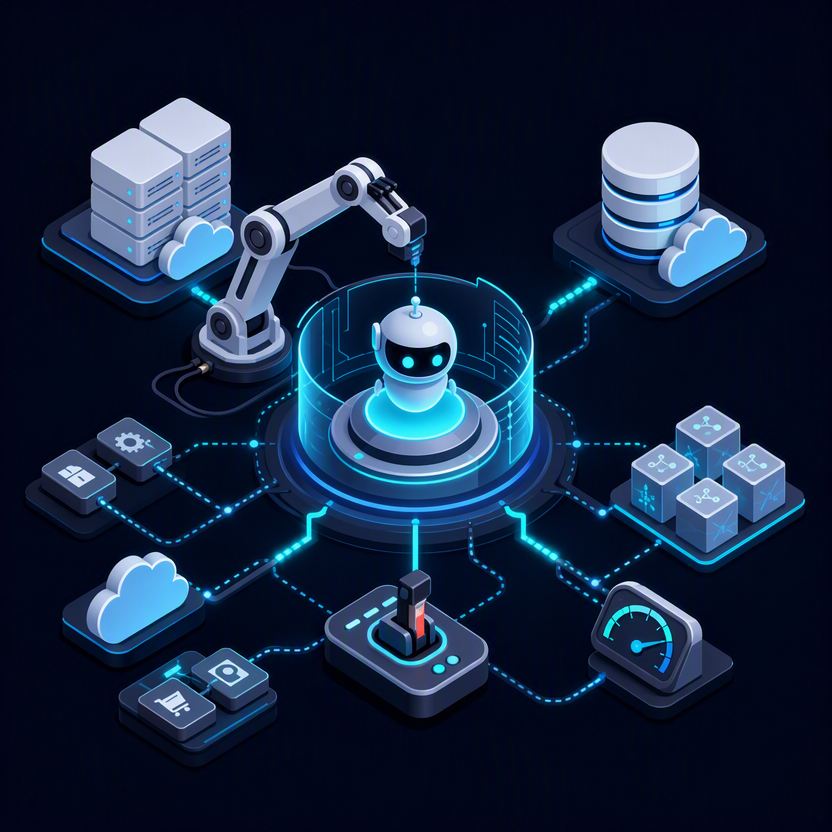
Many organizations lift legacy systems onto the cloud without redesigning architecture or processes - ending up with "the same old system on new infrastructure". Costs may shift from big capital expenses to monthly subscriptions, but redundancy and slowness remain.
ERP carries similar risk: if each department keeps its own data formats and inconsistent definitions of customers, products or costs, the ERP cannot produce a trusted single source of truth - and the new system becomes just another database wired to Excel and legacy systems.
For Thailand specifically, World Bank work on data infrastructure points to persistent constraints in digital skills, data governance, interoperability and cross-agency coordination, even as cloud and AI adoption keeps rising (World Bank).
Reality-check questions executives should ask before approving any project:
- Do master data domains have clear owners and definitions?
- How much redundancy and how many exceptions exist in current processes?
- Will the new system genuinely reduce hand-offs between departments?
- Are integration, customization and data-cleaning costs included in the budget?
- Will employees actually use the system - or keep double-working in legacy systems and Excel?
Hidden costs that never appear in the business case
Licenses and cloud subscriptions are only part of the total. Real projects carry at least six hidden cost categories:
- Data migration: cleaning, matching and validating data before it enters the new system
- Integration: building APIs or middleware to connect ERP, CRM, accounting and specialized systems
- Customization: bending software to old processes until the system becomes complex and hard to upgrade
- Change management: communication, training, role redesign and overcoming user resistance
- Parallel operations: running old and new systems simultaneously during transition
- Technical debt: long-term costs of temporary interfaces, duplicated data and unstandardized customizations
Judge projects on three-to-five-year Total Cost of Ownership - including people, integration, security, support and opportunity cost during transition - never on software price alone.
A three-dimensional ROI framework
Transformation ROI should cover more than cost reduction, across three dimensions:
| Dimension | Example metrics | Executive question |
|---|---|---|
| Financial | Operating cost, incremental revenue, cash flow, payback period, TCO | How much real cash does the project create or save? |
| Operational | Cycle time, error rate, SLA, system availability, adoption rate | Are processes genuinely faster and higher quality? |
| Strategic | Time-to-market, data readiness, scalability, compliance, customer retention | Do we gain capabilities competitors cannot easily copy? |
A starting formula:
ROI = (total financial benefits - lifetime project cost) / lifetime project cost x 100
Benefits entering that formula must be verifiable. If a system saves 10,000 staff hours but cuts no spending, adds no throughput and creates no revenue, those hours should not yet count as full financial return.
A better approach links saved time to end outcomes: more purchase orders processed, shorter collection cycles, or more customers served per staff member.
A readiness-based roadmap
Beginner: build transparency and standards
For SMEs or organizations still dependent on paper and Excel:
- Map your 3-5 critical processes
- Assign owners for customer, product, vendor and account master data
- Choose standard cloud or ERP offerings; avoid heavy customization
- Start with projects that pay back within 6-12 months
- Set baselines before starting: processing time, error rates, cost per transaction
Intermediate: integrate systems and measure across departments
For organizations with ERP or cloud already in place but siloed data:
- Build an integration layer and standard APIs
- Establish master data management and a data-quality score
- Measure end-to-end, from purchase order to cash receipt
- Form a joint business-finance-data-IT working group
- Review cloud costs and license utilization monthly
Advanced: use data and AI to reshape operations
For enterprises with solid data foundations:
- Create data products and a knowledge layer ready for AI
- Redesign processes starting from outcomes, not from legacy systems
- Apply automation or AI first where data quality is already high
- Connect technology KPIs to P&L, cash flow and customer experience
- Use portfolio governance to kill low-value projects early
Conclusion for executives
Transformation that returns ROI is not a race to buy systems fastest - it is the ability to prioritize problems, redesign processes, build trustworthy data and make people actually use the change.
Cloud and ERP are just infrastructure; returns arrive when the organization turns that infrastructure into faster processes, lower costs, sharper decisions and genuinely new capabilities.
The Devsign team helps plan and execute digital transformation - from process mapping and master-data design to integration and measuring real ROI with process owners.
Sources
- Deloitte www.deloitte.com
- World Bank www.worldbank.org