AI safety is no longer a technical debate - it is geopolitics. The UN AI advisory body, US-China competition and voices from smaller nations shape the rules that will govern how every organization uses AI.
AI safety was once a niche concern of researchers. In 2026, it is a matter of international relations, national security and economic competition. The United Nations has established an AI advisory body. The US and China are racing to set standards. Smaller nations are fighting to be heard. And the outcome affects every organization using AI.
Why AI safety became geopolitics
Three converging forces pushed AI safety from academic papers to the UN Security Council agenda:
- Concentration of power - frontier AI capability is controlled by a handful of companies in two countries (US and China). Every other nation is dependent on their choices.
- Dual-use risk - the same models that write code and answer questions can be weaponized for cyberattacks, disinformation and autonomous weapons.
- Economic stakes - nations that control AI standards control the digital economy. This is the new space race.
The UN AI advisory body
The UN has convened a high-level advisory body on AI with members from government, industry, academia and civil society across all regions. Its mandate:
- Develop global AI governance frameworks
- Address the digital divide between AI-capable and AI-dependent nations
- Establish norms for military and dual-use AI applications
- Create mechanisms for international incident reporting and response
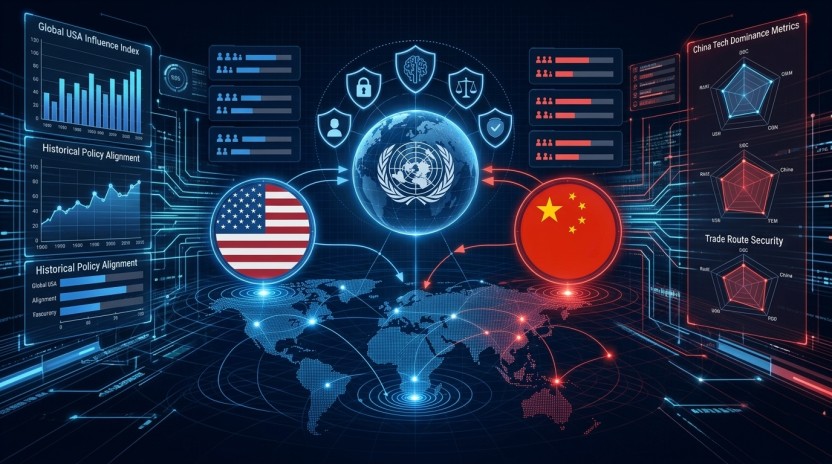
US-China dynamics
The two AI superpowers approach safety differently:
- United States - market-driven, industry-led safety standards with government backstops. Executive orders on AI safety focus on transparency, testing and reporting for frontier models.
- China - state-led regulatory framework with strict content controls, algorithm registration requirements and data governance rules. The state has more direct control over AI deployment.
Both are exporting their models to other countries, creating spheres of AI influence. Organizations in Thailand must navigate both ecosystems.
Voice of smaller nations
Countries like Thailand, Singapore and those in the EU are not passive observers:
- Singapore has positioned itself as a neutral AI hub with its Model AI Governance Framework
- The EU leads with the AI Act - the world’s first comprehensive AI law based on risk tiers
- ASEAN is developing regional AI governance guidelines
- Thailand is drafting its own AI act, informed by PDPA experience and international frameworks
What organizations should do
Global AI governance will not be resolved quickly. But organizations cannot wait:
- Build AI governance now based on existing frameworks (NIST AI RMF, ISO 42001, ETDA guidelines)
- Track regulatory developments in jurisdictions you operate in
- Design for compliance portability - your governance should adapt as rules evolve
- Participate in the conversation - industry input shapes practical regulation
Devsign helps organizations navigate AI governance with frameworks that work today and adapt as regulations evolve.