When AI giants start embedding ads inside chatbot answers, how do you know whether the #1 recommendation is genuinely the best or simply the highest bidder? And why enterprises are moving to private LLMs.
Imagine asking ChatGPT "which accounting software is best for a small company" and the first answer is a brand you have never heard of, complete with glowing praise. How would you know whether that is a genuinely neutral opinion or something someone paid the AI to say? This is the question shaking trust across the AI industry in 2026.
What happened
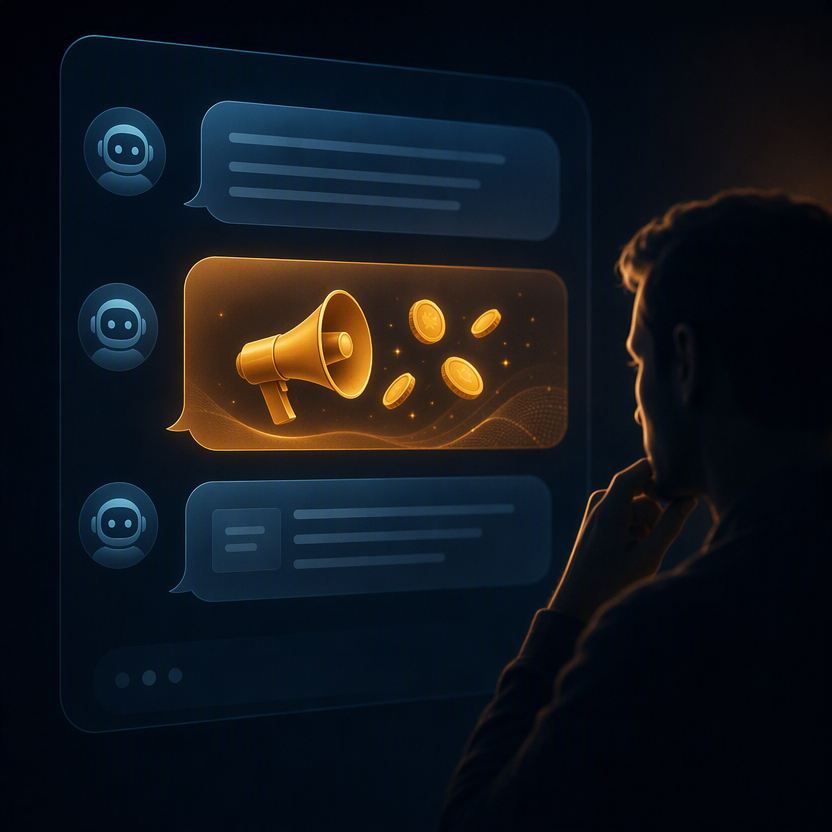
In early 2026, several major AI companies began experimenting with ads inside their chatbot answers - not banner ads in the corner, but commercial content woven naturally into the answer so users cannot tell which part is information and which is advertising.
This would not be a problem on Facebook or Google, where we already expect ads. But AI chatbots built their reputation on being a "neutral assistant" that helps find the best answer. When neutrality can be bought, trust collapses.
Tangible impacts
- The #1 answer is not the best choice - it is the one that paid the most; unsuspecting users trust it and decide wrongly
- Business intelligence gets distorted - if your team uses AI to research decisions, you cannot know whether the answer was ad-skewed
- Privacy erodes - advertising needs user data for personalization; the more you use it, the more you are tracked
The enterprise answer
A growing number of organizations are turning to Private LLMs installed within their own infrastructure:
- No injected ads, because you own the system
- No data sent externally - PDPA-safe
- Answers grounded in your organization’s real data, not public content
- No creeping costs from ad-tied models
Learn more about Private LLMs and on-premise AI with an engineering team that has done it for real.