NVIDIA Vera Rubin builds rack-scale AI factories, Apple M5 embeds neural accelerators in every GPU core, Intel Panther Lake returns on the 18A node, AMD MI350 champions the open ecosystem - the full 2026 landscape.
2026 marks one of the biggest turning points in hardware history. Competition is no longer measured in clock speed or core count but fought at the level of "AI-specific architecture" - from rack-scale data centers down to power-sipping chips in portables.
NVIDIA, Apple, Intel and AMD each launched fundamentally different world-changing innovations. This article maps the landscape, the standout technologies, the differences and what they unlock next.
1. NVIDIA: Vera Rubin architecture - from selling GPUs to building Agentic AI factories
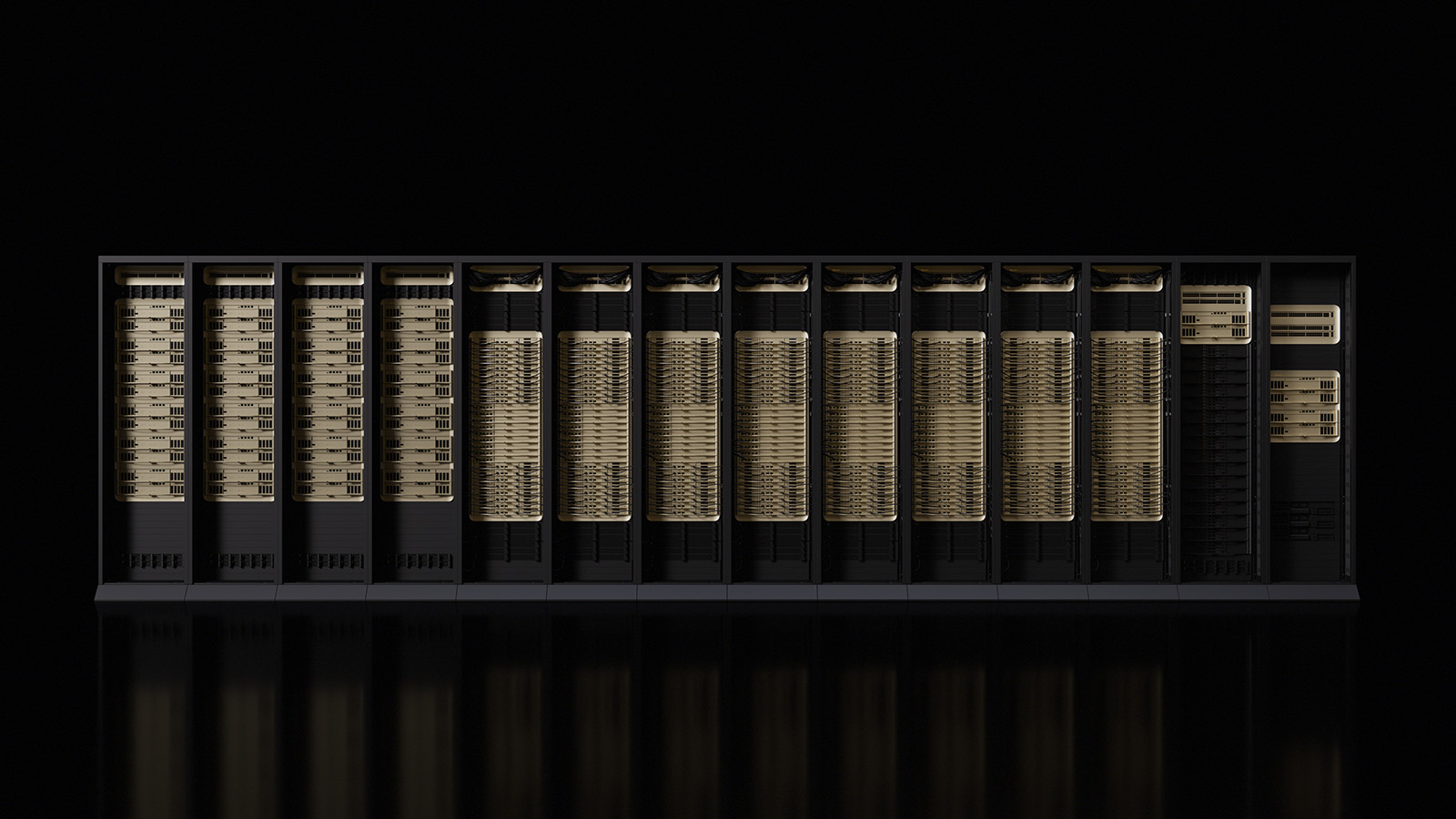
NVIDIA has fully stepped beyond "graphics card maker" into building rack-scale infrastructure with the Vera Rubin platform, succeeding the Blackwell era.
Technology highlights
- Six chips fused into one system: Rubin is not a single GPU but a rack combining six major components - Vera CPU, Rubin GPU, NVLink 6 Switch, ConnectX-9 SuperNIC, BlueField-4 DPU and Spectrum-6 Ethernet Switch - into a complete "AI factory"
- HBM4 memory & NVFP4: up to 8 Exaflops (NVFP4) per rack, with NVLink bandwidth of 260 TB/s per NVL72 rack - more bandwidth than the entire internet - many multiples faster than prior architectures
How it differs from Blackwell
Blackwell scaled traditional LLM training compute; Rubin is designed specifically for Agentic AI and Test-time Scaling (letting AI think deeply before answering), with inference token costs up to 10x lower than Blackwell (and MoE training on 4x fewer GPUs).
What it unlocks
Real-time continuous multi-step AI agents, million-token context windows for hours-long code and video analysis, and the foundation for robotics and world models.
2. Apple: M5 family (M5, Pro, Max, Ultra) - neural accelerators in every GPU core
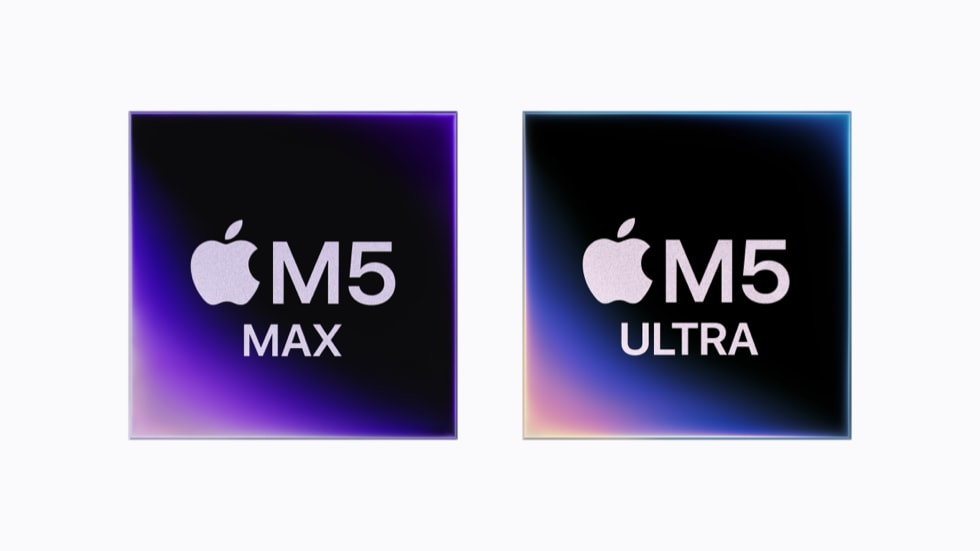
Apple launched the M5 in October 2025, extended by M5 Max and M5 Ultra in the Mac Studio in August 2026 - the most powerful Macs Apple has ever built.
Technology highlights
- Neural Accelerator in every GPU core: a next-generation GPU architecture embedding AI compute units in every GPU core - AI performance over 4x M4 and over 6x M1
- M5 Max: 18-core CPU + up-to-40-core GPU + 128GB unified memory + 614 GB/s bandwidth (up 50%) - AI performance 3.9x M4 Max
- M5 Ultra (new in Mac Studio): 36-core CPU + up-to-80-core GPU (the most powerful Apple GPU ever) + 512GB unified memory + 1.2 TB/s bandwidth - AI compute 4.3x M3 Ultra and 9.8x M1 Ultra
- Thunderbolt 5 + RDMA clustering: connect four Mac Studios into a giant shared memory pool for up to 3x faster AI inference
What it unlocks
Running frontier-class LLMs fully locally with no token counting or cloud bills, 100% privacy, plus the new Core AI and MLX frameworks for developers.
3. Intel: Panther Lake (Core Ultra Series 3) - the comeback on Intel 18A
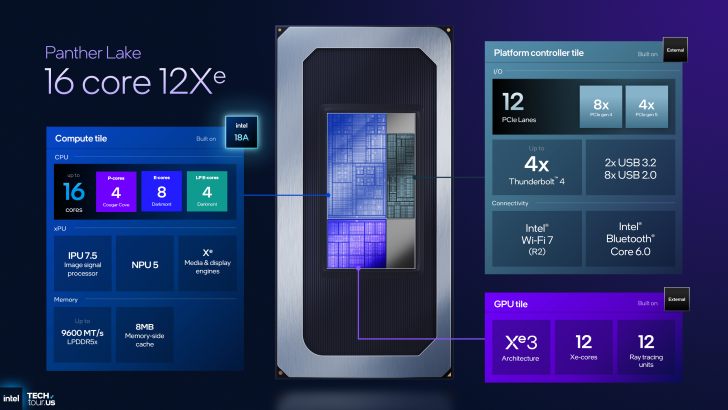
After Lunar Lake and Arrow Lake manufactured on TSMC, Intel returns to its own fabs with the Intel 18A node in a multi-tile SoC - for the first time in years.
Technology highlights (from Intel + Ultrabook Review)
- Intel 18A + multi-tile SoC: the primary CPU tile on Intel’s own 18A, the GPU tile (Arc B390, 12 Xe3 cores) on TSMC - a chiplet architecture combining both nodes’ strengths
- 16-core CPU (4P + 8E + 4LPE): Cougar Cove P-cores + Darkmont E-cores with LPDDR5x-9600 and no Hyper-Threading (16 cores = 16 threads)
- Arc B390 GPU (12 Xe3 cores): up to 50% faster than Arc 140V and quicker than AMD’s Radeon 890M - with XeSS 3 multi-frame generation for the first time outside NVIDIA’s ecosystem
- 180 platform TOPS: NPU5 (~50 TOPS) + GPU + CPU combined, with Copilot+ PC certification
Three die configurations (from the Wccftech deep dive)
- Panther Lake 8C: 4 P-cores (Cougar Cove) + 4 LP-E (Darkmont) + 4 Xe3 GPU cores - replaces Lunar Lake
- Panther Lake 16C: 4 P-cores + 8 E-cores + 4 LP-E + 4 Xe3 GPU - replaces Arrow Lake-H
- Panther Lake 16C 12Xe (flagship): 12 Xe3 GPU cores with LPDDR5X-9600 (150+ GB/s) - GPU tile on TSMC N3E, compute tile on Intel 18A
Real-world performance (Intel official + Wccftech CES 2026)
- +60% multi-thread at equal power vs Core Ultra 9 288V (Lunar Lake)
- +82% gaming - Arc B390 vs AMD Radeon 890M (1080p, multiple titles)
- +40% power efficiency at equal single-core performance
- Faster than AMD Ryzen AI 9 HX 370 in multi-core work (Cinebench 2024 MT)
- 16.5 hours Netflix streaming battery life (X7 358H)
What it unlocks
Native AAA gaming on thin-and-light laptops (Cyberpunk 2077 FHD: 54 fps native → 118 fps with XeSS 3) plus on-device AI on the new NPU 5, Thunderbolt 5 and Wi-Fi 7 - all within a 15-80W TDP with all-day battery.
4. AMD: Instinct MI350 series - the open-ecosystem data center accelerator
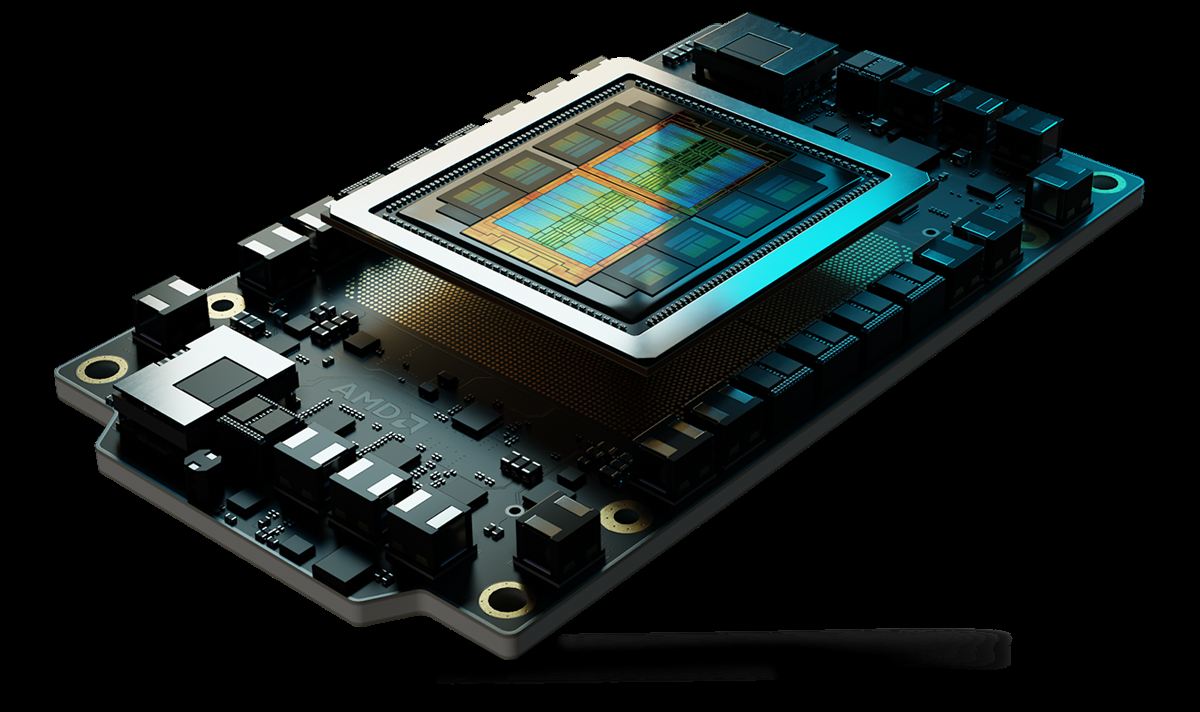
AMD attacks the AI data-center market with the Instinct MI350 series (CDNA 4) promising "leadership performance, cost-efficient, fully open-source" - the strongest NVIDIA alternative of 2026.
Technology highlights (from AMD official)
- CDNA 4 + MXFP6/MXFP4: new AI-inference datatypes faster than legacy FP16, with peak AI performance of 10.1 PFLOPS (MXFP4/MXFP6) per GPU
- 288GB HBM3E + 8 TB/s: enormous memory (1.6x the B200’s 180GB) with bandwidth above the B200’s 7.7 TB/s
- MI355X vs B200: 2.2x higher FP6/MXFP6 AI performance and 2.1x HPC FP64 (AMD Performance Labs)
- MI350P PCIe card (new): a PCIe card for enterprises deploying AI in existing racks without rebuilding infrastructure (144GB HBM3E, 4 TB/s, 128 CUs)
- Helios rack-scale (8-GPU platform): eight GPUs joined via 4th-gen Infinity Fabric totaling 2.3 TB HBM3E + 64 TB/s aggregate bandwidth + 80.5 PFLOPS
The open ecosystem
AMD’s core strength is the ROCm open-source software stack - no licensing fees, Day-0 support for major frameworks (PyTorch, Hugging Face, Meta, OpenAI) and AMD Inference Microservices (AIMs) deployable on Kubernetes without vendor lock-in, delivering significantly lower TCO than NVIDIA.
What it unlocks
Cheaper training and inference for large models, giving open-source AI and companies seeking alternatives to NVIDIA’s closed ecosystem a real option - plus enterprise AI in existing racks via the MI350P PCIe card, without a full data-center rebuild.
Comparison table
| Vendor | Chip / architecture | Node / architecture | Standout innovation | What it unlocks |
|---|---|---|---|---|
| NVIDIA | Vera Rubin (NVL72/144) | Rack-scale 6-chip, HBM4 | 8 Exaflops for agentic AI | Real-time deep-thinking agents |
| Apple | M5 / Pro / Max | Dual-die 3nm fusion | Neural accelerator in every GPU core | On-device LLM training + GenAI |
| Intel | Panther Lake (Core Ultra 3) | Intel 18A multi-tile SoC | 18A multi-tile + Arc B390 + 180 TOPS AI | XeSS 3 gaming at 118fps + Copilot+ PC |
| AMD | Instinct MI350 | CDNA 4 | 35x higher FP4/FP8 density | MI350P PCIe + open-source ROCm cut costs |
Conclusion: where hardware goes next
The latest generation makes one thing clear: the era of measuring power in GHz is over. Three forces now drive direction:
- AI-specific cores - specialized compute embedded everywhere: CPU, GPU, even networking silicon
- Memory-centric design - memory bandwidth (HBM4 / unified memory) is now a bigger bottleneck than raw processor speed
- Efficiency over raw power - new nodes like Intel 18A and Apple’s 3nm fusion aim to cut power so AI runs longer on smaller devices, not just to add speed
These foundations will move AI from "chatbot answering questions" toward "intelligent assistants that think, act and process on our behalf seamlessly" - both in the cloud and in pocketable devices.
For organizations planning AI infrastructure, matching hardware to real workloads matters more than chasing top specs. The Devsign team consults and designs AI infrastructure - from requirements surveys to GPU selection and cost-effective data-center design.
Sources
- NVIDIA Newsroom: Vera Rubin platform nvidianews.nvidia.com
- Apple Newsroom: Mac Studio with M5 Max and M5 Ultra www.apple.com
- AMD: Instinct MI350 Series www.amd.com
- Intel: Core Ultra Series www.intel.com
- Wccftech: Intel Panther Lake on 18A wccftech.com
- PC Gamer: Panther Lake revealed www.pcgamer.com
- Ultrabook Review: Panther Lake laptops www.ultrabookreview.com